| Period| | 2019-10-08 - 2019-10-13 |
|---|---|
| Operating hours| | 10:00 - 18:00/ WEELEND 10:00 - 18:00 |
| Space| | Chungbuk Culture Center gallery |
| Address| | 67, Daeseong-ro 122beon-gil, Sangdang-gu, Cheongju-si, Chungcheongbuk-do, Republic of Korea |
| Closed| | MONDAY and HOLIDAY |
| Price| | Free |
| Phone| | 043-223-4100 |
| Web site| | 홈페이지 바로가기 |
| Artist| |
나수민
|
정보수정요청


|
|
Exhibition Information
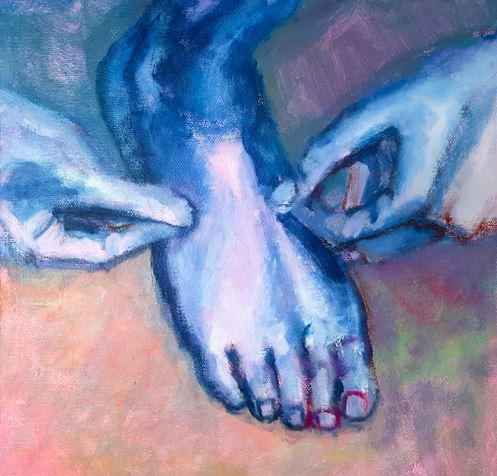
			What's at the end of the rainbow?

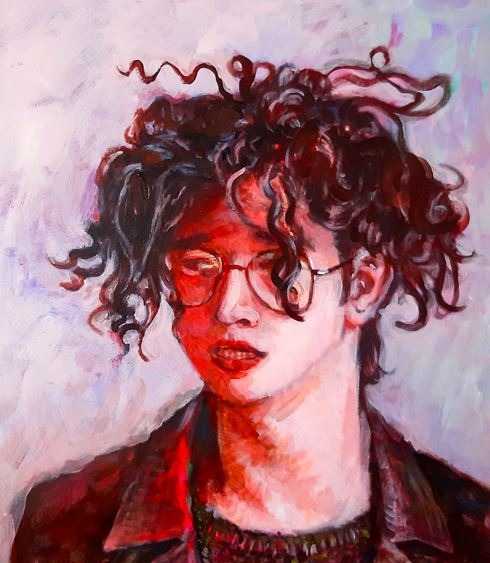
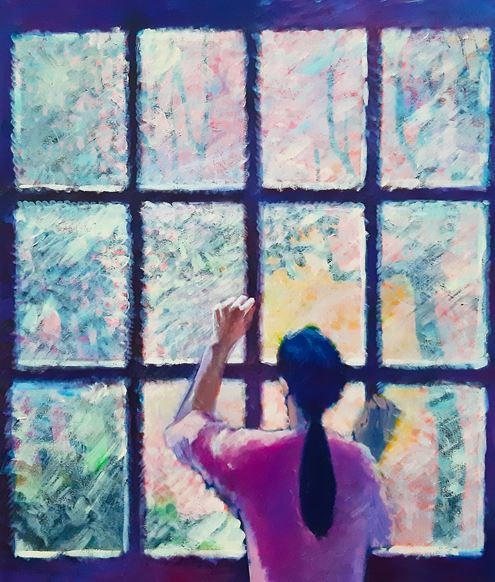
Spring, when new sprouts shoot up and leaves turn fresh green, is like youth. The period of youth, so called the springtime of life, is often described as the most radiant moments in one's life. Yet to today's young adults who are challenged by serious social issues such as the rise of youth unemployment, is youth still a hopeful and rosy season of life? Artist Na Sumin captures everyday lives of the young people today and by doing so he also captures the meaning of life paths laid out before him.

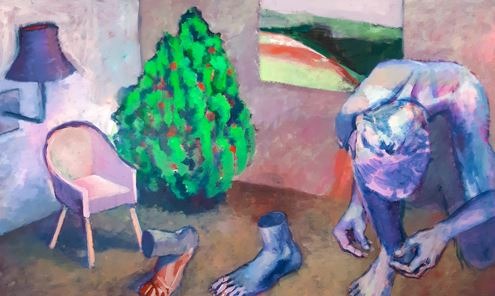
Portraits in Sumin's works evoke a sense of peculiar sadness. Instead of a proper bed they nap or lethargically lie on a sofa and spend hours and hours looking at smartphones. Or they just stand still as if they were deeply rooted in a forest packed with trees. None of these hint any sense of freshness and liveliness which usually associate with the word youth. Readable emotions from their blurred faces are rather close to sadness - lethargy, loneliness and melancholy.

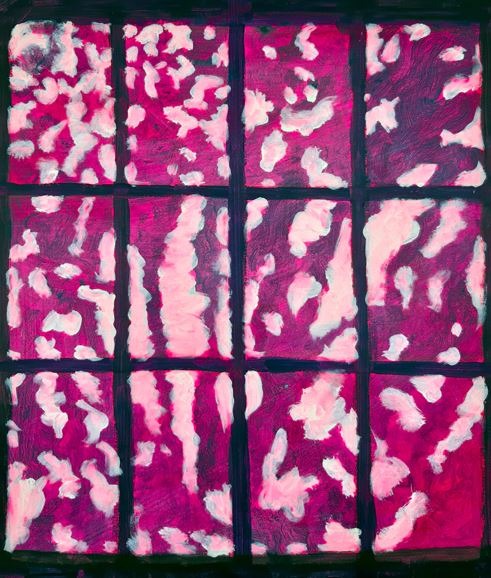
A feeling of bleakness that dominates the canvas can also be traced from the way Sumin portrays plants. Trees in the dense forest are neither spring trees with early buds nor summer trees full of life nor bright and colorful autumn trees. Instead they represent typical winter trees with no leaves. Even dandelions are not in full bloom of yellow flower nor with fluffy white seed heads. What remains on the canvas are empty stems.

Nonetheless the story of youth the artist wants to share with the viewers is hope after all. The portraits of young men who seemingly in despair pull themselves up arduously and stare where 'the rainbow ends'. What is at the end of the rainbow where their eyes turn to? As stories passing down in many European countries say, is there a pot of gold at the end of the rainbow? According to Genesis rainbow is a sign of promise after Noah's Flood that God would never punish the Earth with flood again. To the tired and hopeless young people, there cannot be any better consolation than this solid promise to keep safe from any future struggles.

 The rainbow does not appear on mild and clear days. After the pouring heavy shower, a colorful spectrum of light reflected on droplets shows up. Perhaps what the youth today have to live through is like a day when we are soaky wet under the impossibly unavoidable shower that we cannot see an inch before us. The artist, however, says that there is the rainbow at the end of that long, tough day. It is not a coincidence that another plant which the artist chose to paint is oak tree that signifies 'the tree of life' and 'the allegory of prosperity' in iconography. Those young men who were lethargically lying will definitely get up and will face not a pouring rain but a bright rainbow shimmering just like them. This very truth is evident in the artist's works as the painter himself is one of youth in this era.

 Seong Hye Jin


 Naver
Facebook
Kakao story
URL 복사
Naver
Facebook
Kakao story
URL 복사


